The Veil Report

LIVE • Weekdays 10PM CT • The Veil Report with J.C. Wilder 

LAS VEGAS •

Share:

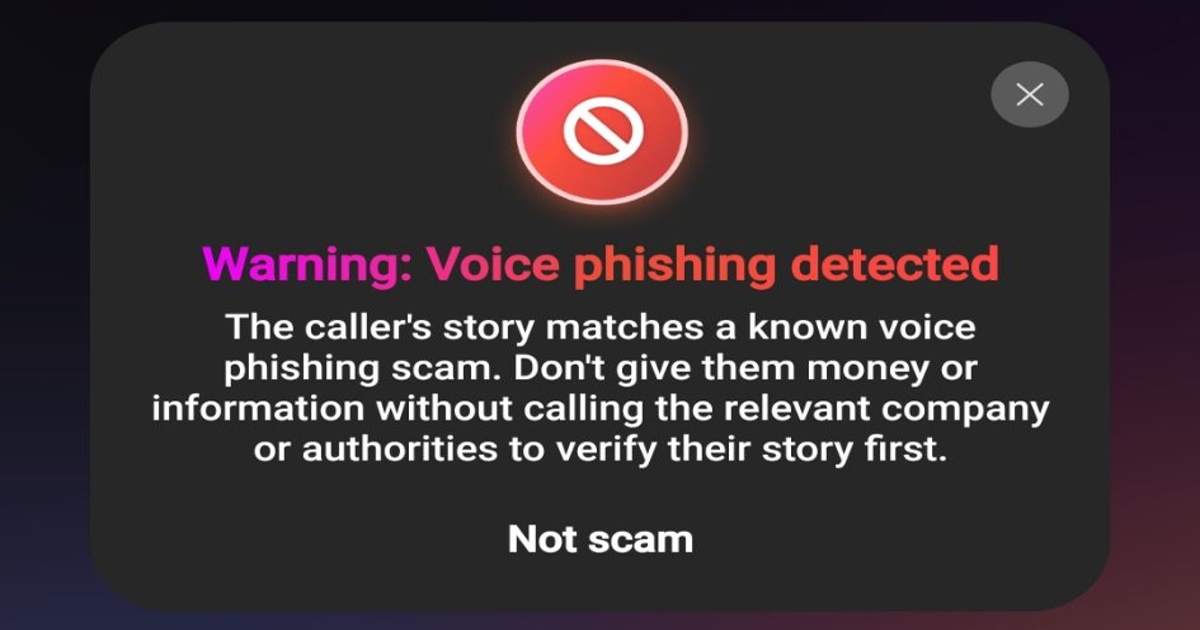
Deep State Using Fake Voice Phishing Warning to Scare Potential Guests

The Warning Randomly appeared midway through a guest booking for no clear reason


Fake Voice Phishing Warning
theveilreport.com

I was midway through a normal phone call, asking someone to come on The Veil Report, when his phone cut in and told him I was the scam.

Not a robocall. Not a bank. Not the IRS. A private conversation about a guest spot. Halfway through it, a warning landed on his screen: the person he was already talking to might be running a voice-phishing operation, and he should not give any information.

He read it to me while we were still on the line.

That is the whole incident. No one asked for a Social Security number. No one asked for a code. No one asked for money. The only thing on the table was a microphone and a time slot. The warning still fired, and it fired at the exact moment a potential guest was deciding whether to say yes.

The official story

Voice phishing, or vishing, is real. Scammers call pretending to be a bank, a carrier, or a government office, then push for a one-time code, a password, or a transfer. Carriers and phone makers now slap labels on calls they do not like: Scam Likely, Spam Risk, potential fraud. Those labels are probability scores, not verdicts. A number gets flagged because of complaint volume, dialing patterns, or a reputation hit, and the person on the other end is told to hang up and trust nothing. norton.com

That system exists. It also fails. Legitimate businesses get branded as fraud every day because a neighbor number was spoofed, or because an algorithm decided the call looked like traffic it had seen before. The label is a nudge. It is not proof.

What it is very good at is ending the conversation.

The timing
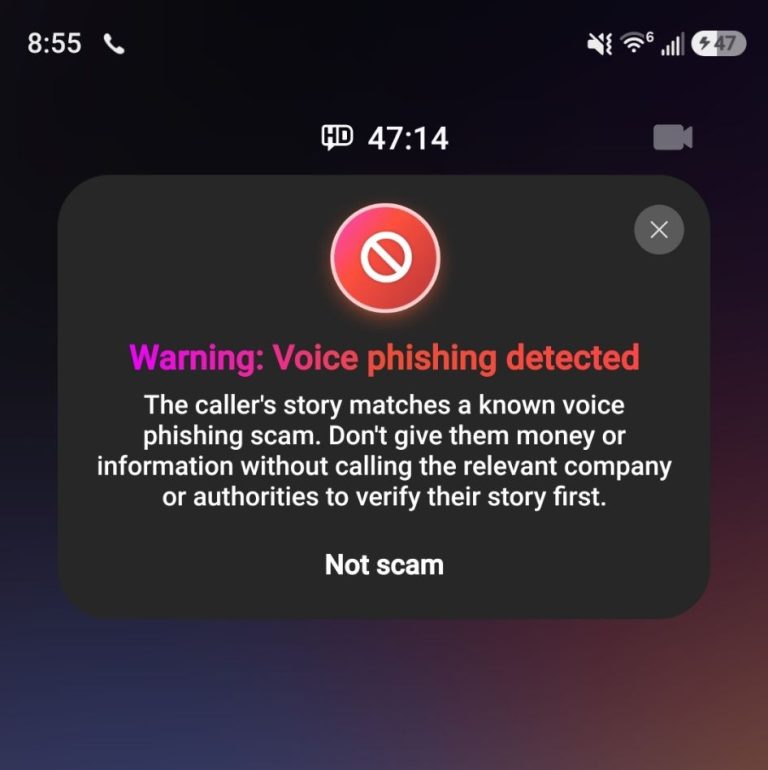
A generic scam warning on an unknown inbound call is one thing. A warning that appears during a call the recipient already accepted, naming the person he is speaking with as a possible voice-phishing threat, is another.

The guest was not cold-called by a stranger selling gift cards. He was on the phone with the host of a show he had already agreed to discuss. The alert did not say “unknown number.” It pointed at the voice already in his ear and told him not to give information.

Information about what? There was no account. There was no payment. The only information in play was whether he would appear on a broadcast that asks questions powerful people would rather not answer.

Fear is the product. If the warning is believed, the guest hangs up, second-guesses the invite, and tells the next person that the show tried to phish him. The booking dies without anyone having to make a call, send a letter, or put a name on a cancellation. The machine does it, and the machine can always say it was only trying to help.

What this is not

This is not a claim that a switchboard operator in Langley typed the alert by hand. Carrier fraud filters, operating-system call screening, and third-party scam apps all sit on the same pipe, and any of them can inject a warning into a live call. The useful question is not which logo was on the bubble. The useful question is who benefits when a private booking call is reclassified, in real time, as a crime in progress.

Alternative media does not lose guests only when platforms ban the channel. It loses them when the guest’s own phone tells him the host is a criminal. That is a softer tool than a subpoena and harder to appeal. There is no notice. There is no hearing. There is a popup, and then there is silence.

To anyone who got the same warning

If your phone tells you The Veil Report is a voice-phishing scam while you are being asked to come on the air, please screenshot and send me a copy. Check the site. Check the X account. Ask whatever you want before you agree to anything. That is ordinary caution, and it is welcome.

Do not treat a carrier popup as a background check. Those systems guess. They are wrong often enough that the FTC and the carriers themselves describe the labels as warnings, not findings. A warning that arrives in the middle of a guest booking, with no request for money and no request for a code, is not evidence of a scam. It is evidence that someone, or something, would rather that guest never sit down.

The invitation still stands. The veil does not lift itself.

J.C. Wilder — theveilreport.com

Share: